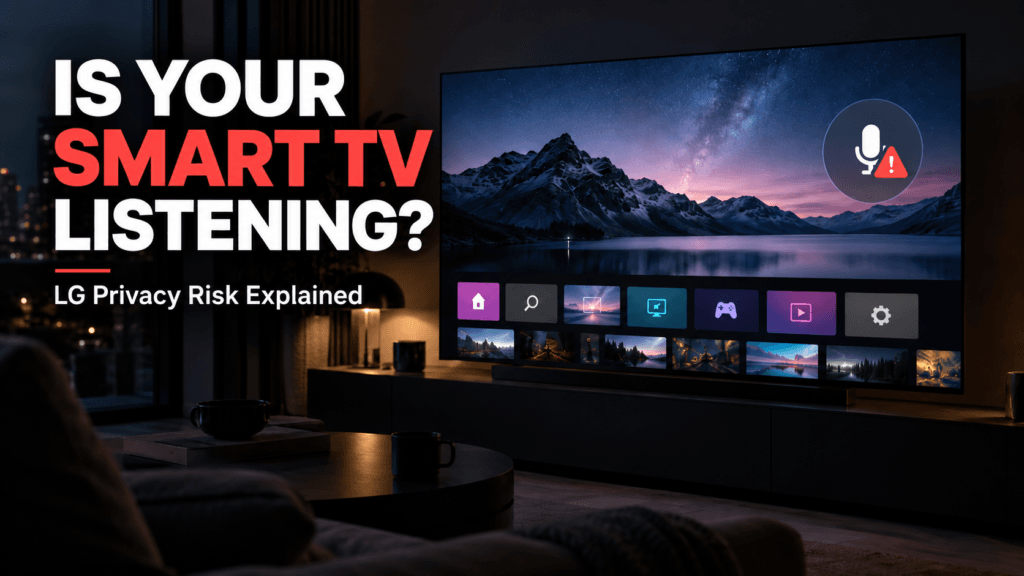
Short answer: New research into several LG smart TVs found extensive viewing and network-data collection and reported security flaws that could make microphone access possible if a TV were compromised. That does not mean every LG TV is actively recording its owner, but it is a good reason to update the TV, review tracking and voice settings, and isolate it from sensitive devices on your home network.
The important distinction is that some findings involve normal product tracking features, while others involve security vulnerabilities that researchers say are still being disclosed privately to LG.
What did researchers actually find?
Gamers Nexus, working with Level1Techs and independent researchers, examined several LG TVs and reported three separate areas of concern.
First, the TVs used Automatic Content Recognition, or ACR, to identify what was being watched. ACR is not unique to LG and is commonly used by smart-TV manufacturers for recommendations, analytics and advertising.
Second, the researchers say the tested TVs identified devices on the local network and collected information about nearby Wi-Fi networks and connected hardware such as phones, PCs and smart-home devices.
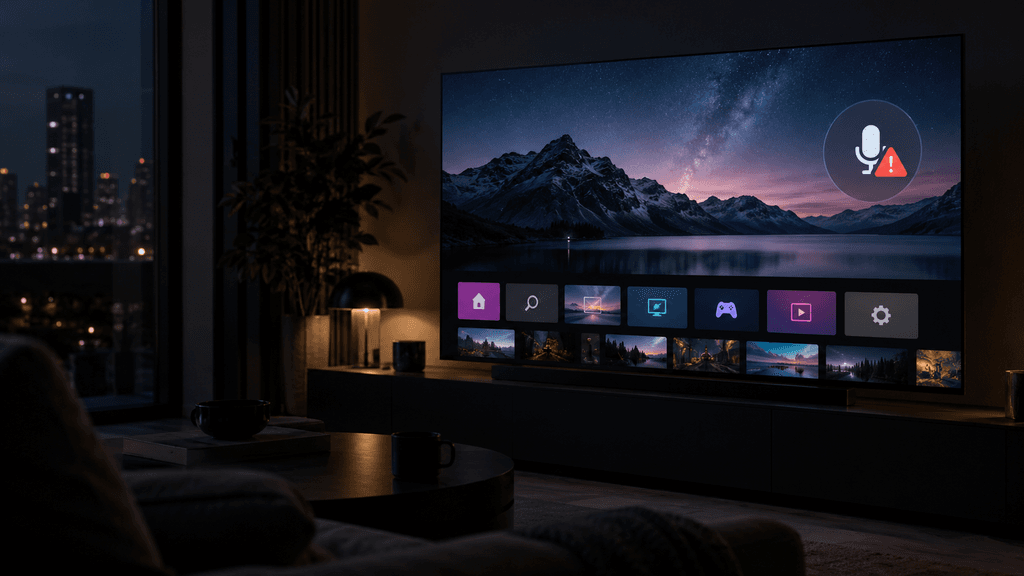
Third, they demonstrated that a compromised TV could capture microphone audio, including while the television appeared to be in standby. The researchers also reported remote-code-execution vulnerabilities to LG but have not published the full technical details while responsible disclosure is ongoing.
That last point matters. The finding is not simply:
“Every LG TV constantly sends private conversations to LG.”
The security concern is that certain weaknesses may allow a compromised television to become a listening device.
Does LG officially collect data from smart TVs?
Yes, LG’s own privacy documentation confirms that its services can collect device and usage information.
LG’s German privacy policy lists data including IP addresses, device identifiers, router information, application history and, for some services, voice information. It also states that separate privacy terms apply specifically to Smart TV and Smart Media products.
That does not prove malicious behaviour. It does show why smart TVs should be treated like connected computers rather than passive displays.
1. Update the TV firmware
This is the first thing owners should do.
Researchers have reported vulnerabilities to LG, but the full technical details and a complete list of affected models are not public yet. That means there is currently no reliable way for an ordinary owner to look at one model number and know that it is definitely affected or unaffected.
Open your LG TV’s settings and check for a software update.
Also visit LG’s official support page for your exact model and compare the installed firmware version with the latest available version.
If LG releases a security patch, installing it promptly is more useful than changing random settings.
2. Review ACR and viewing-data settings
ACR identifies content being watched so the TV can build viewing information.
If you do not want that feature, review:
Settings → Privacy / User Agreements / Additional Settings
The exact menu varies by webOS version and model.
Look for wording related to:
- Live Plus
- Viewing information
- Content recognition
- Personalized advertising
- Advertising ID
- Recommendations
Malwarebytes recommends disabling ACR, viewing-information collection and personalized advertising when those features are not needed.
Do not blindly accept every optional agreement during TV setup.
3. Disable voice features you do not use
Some LG TVs and remotes support voice recognition.
If you never use voice commands, there is little benefit in leaving unnecessary voice features enabled.
Review:
Settings → Privacy / Voice / AI Services
The wording depends on the television.
LG’s current privacy documentation confirms that voice information can be processed when voice-connected services are used.
Disabling voice features does not guarantee protection against a software vulnerability, but it reduces normal data collection and removes features you do not need.
4. Put the TV on a guest or IoT network
This is one of the strongest practical protections.
A smart TV does not need unrestricted access to the same network used by:
- Work laptops
- NAS devices
- Printers
- Security cameras
- Personal PCs
- Home servers
If your router supports a guest or IoT network, connect the TV there instead.
Malwarebytes recommends this because a compromised smart device then has fewer opportunities to probe other devices on the main home network.
The TV can still access the internet for Netflix, YouTube and streaming services.
5. Disable UPnP if you do not need it
UPnP allows devices to automatically request network access and open ports.
That is convenient, but it can also increase exposure when a connected device is compromised.
Malwarebytes recommends disabling UPnP on the router unless you genuinely need it and avoiding exposing TV services directly to the internet.
Be aware that disabling UPnP can affect gaming consoles, media servers or other applications that rely on automatic port configuration.
6. Understand what standby means
Pressing the power button does not necessarily remove electrical power from a smart TV.
Many modern TVs remain partially active in standby so they can:
- Start quickly
- Receive updates
- Respond to network commands
- Support voice or smart-home functions
The researchers’ microphone demonstration is especially concerning because it reportedly worked while a compromised TV appeared to be off.
If you need to guarantee that a television cannot run software or use a built-in microphone, disconnecting it from power is stronger than placing it in standby.
That is not necessary for normal daily use, but it is worth understanding the difference.
7. Do not panic — but treat the TV as a computer
The worst response would be assuming every LG TV has already been hacked.
There is currently no public evidence showing widespread exploitation of these reported vulnerabilities.
The more reasonable response is to treat the TV like every other networked device:
- Keep it updated
- Remove unnecessary permissions
- Minimize data collection
- Isolate it from important devices
- Check settings after major updates
- Avoid exposing it directly to the internet
This approach also applies to smart TVs from other manufacturers. ACR and advertising-based tracking are industry-wide issues, not something invented only by LG.
Can you tell whether your LG TV is affected?
Not reliably yet.
The researchers have not publicly released the full vulnerability details or complete affected-model list because disclosure to LG is still ongoing.
Until LG publishes a formal advisory or model-specific fixes, owners should avoid websites claiming that every LG TV is vulnerable unless they provide technical evidence.
Check your exact model’s official LG support page regularly.
Bottom line
The latest LG smart-TV investigation raises two separate concerns.
The first is privacy: smart TVs can collect viewing, advertising and network-related information as part of their normal operation.
The second is security: researchers say flaws in tested LG TVs could allow much more serious access, including microphone capture, if a device is compromised.
You do not need to throw away your television.
Update it, disable tracking and voice features you do not use, place it on a separate network if possible, and watch for an official LG security advisory.
That is a more useful response than assuming either that nothing is wrong or that every LG television is secretly recording its owner.
Sources
Gamers Nexus — Data Dragnet / LG investigation project
Malwarebytes — LG TV flaws could let attackers listen in, even in standby mode